Planning a gel manicure in Seminyak? Along with choosing your colour, it is worth deciding how you will protect the skin on your hands during the lamp stage. A little preparation makes this easier to discuss before your appointment begins.
The short answer: bring suitable sunscreen or fingerless protective gloves, ask whether your chosen service needs a curing lamp, and discuss a lamp-free option if you prefer to avoid that exposure. Do not assume that a lamp labelled “LED” is UV-free.
Do LED gel lamps also emit UV?
Yes. The labels can be confusing: both UV and LED nail-curing lamps can emit ultraviolet radiation, mainly UVA. Cancer Council Australia explains that exposure during a salon visit is usually brief and levels are generally low, but research on these devices remains limited.
Ask about the actual service rather than choosing on the lamp label alone. A useful question is: “Does this polish need a lamp to cure, and can we plan hand protection before that step?” This guide does not identify the lamp models used at Sugarbomb.
What to bring to your manicure
- Broad-spectrum, water-resistant sunscreen. The American Academy of Dermatology (AAD) recommends SPF 30 or higher on your hands before a gel manicure. Cancer Council Australia recommends SPF 50 or 50+, applied 20 minutes before lamp exposure. Bring your own product and discuss application timing before the service starts.
- Fingerless protective gloves, if you prefer them. The AAD describes dark, opaque gloves with the fingertips exposed as another option. Check that they cover the skin you want to protect while leaving the nails accessible. Exposed fingertips still need consideration; gloves do not cover every part of the hand.
- A short list of questions. Ask whether the salon provides protective items or whether you should bring them. Availability should be confirmed, not assumed from a photograph or an online article.
Agree on the plan before polish application
Mention your preference when booking and again when you arrive. This gives the technician a chance to explain the sequence of the service and discuss how your sunscreen or gloves can fit into it.
For example: “I would like to protect my hands during curing. Should I bring fingerless gloves, and when should I apply sunscreen?” If your hands are washed or products are removed during preparation, ask how protection will be handled before the lamp stage rather than assuming the earlier application is still sufficient.
What if you would rather skip the lamp?
Ask whether a traditional air-drying polish or a manicure without colour is available for your appointment. Confirm that the complete service, including its top coat, does not require a curing lamp. Do not assume every product marketed as “gel-like” follows the same process.
MD Anderson Cancer Center includes choosing a service without a UV lamp among its suggestions for reducing salon UV exposure. A reference photo can still help you discuss colour and shape, but it does not tell you which product or curing method was used.
Keep the risk in perspective
MD Anderson says the skin-cancer risk from nail dryers appears low based on current evidence. That is not a promise of zero risk: UV exposure accumulates over time, and reducing unnecessary exposure is sensible. If you have had skin cancer or have concerns about your personal risk, ask a dermatologist before choosing a lamp-cured service.
For a Bali trip, keep everyday sun protection in mind too. Cancer Council notes that excessive exposure to the sun remains the greater skin-cancer concern. A manicure precaution does not replace protection during the rest of your holiday.
Planning your Sugarbomb appointment in Seminyak
Explore Sugarbomb’s nail services and current price list, then confirm your preferred finish, whether it requires a lamp, and what hand protection you should bring. Confirm the final service and price directly with the team.
Sugarbomb’s Bali studio is at Ruko Drupadi Corner, Jl. Drupadi blok H, Seminyak. Use the booking link on the official Bali page to choose the correct location.
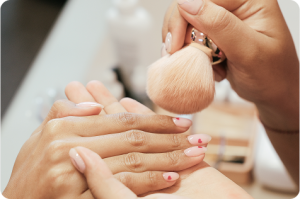
This article provides general educational information, not a personal medical assessment. The featured photograph illustrates a nail appointment; it does not demonstrate UV protection or a specific lamp. Sources and official service pages checked on 9 November 2026.